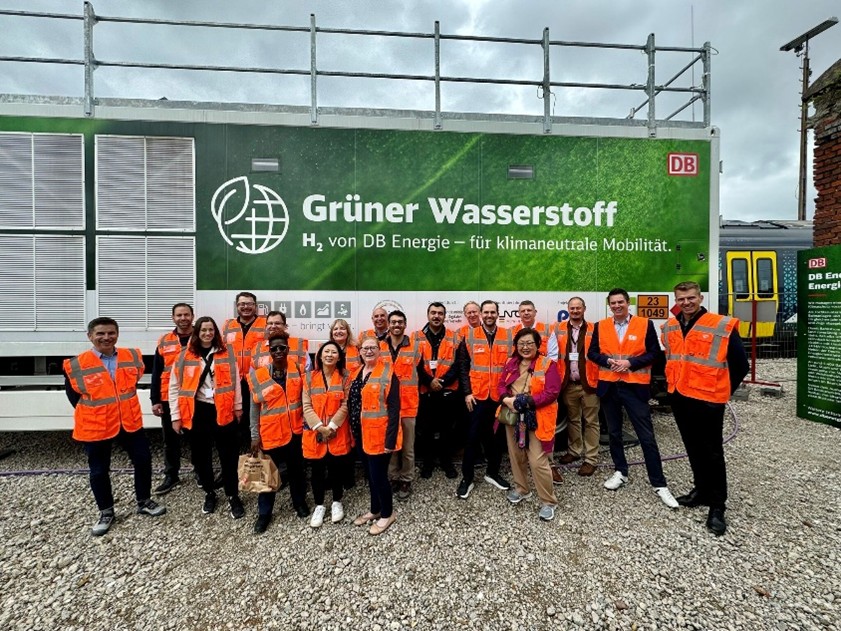
Guided Tour of the Mireo Plus H, part of the H2goesRail project developed by Deutsche Bahn and Siemens Mobility
DB E.C.O. North America hosted a delegation trip from May 12–17, 2024, guiding transportation leaders from the United States and Canada through a week‑long program on “Exploring Germany’s Net Zero Emission Initiatives.” The trip offered an inside look at Deutsche Bahn’s commitment to achieving climate neutrality by 2040 and showcased cutting‑edge technologies, innovative operating concepts, and strategic approaches designed to advance zero‑emission rail services. Participants engaged in expert presentations, hands‑on site visits, and exclusive facility tours across Berlin, Frankfurt, Stuttgart, and Cologne, fostering meaningful transatlantic exchange on climate‑friendly mobility.
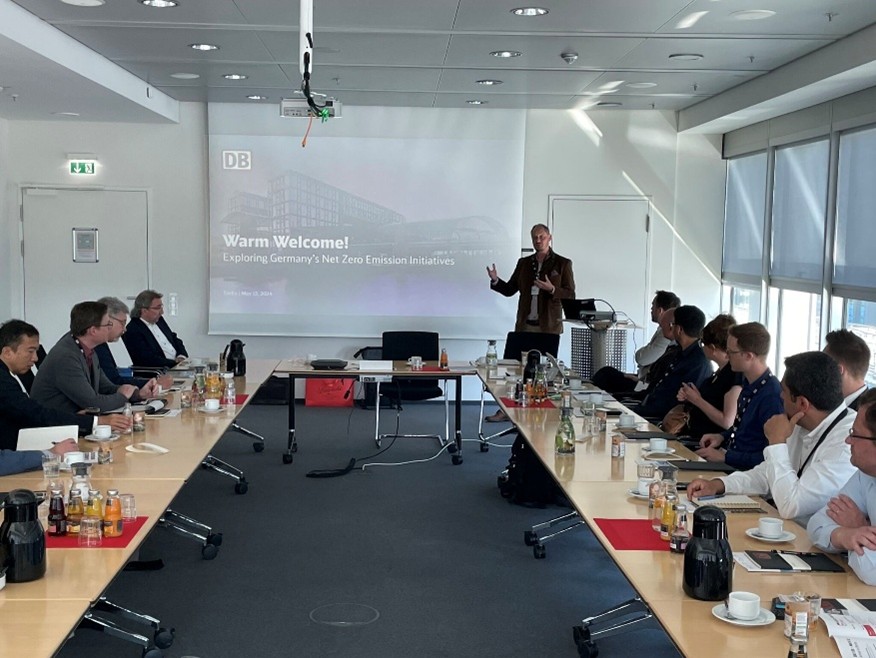
Welcome remarks by Andreas Hoffrichter, Principal, Head of Center for Net Zero Transformation in Rail and Transit, DB E.C.O. North America 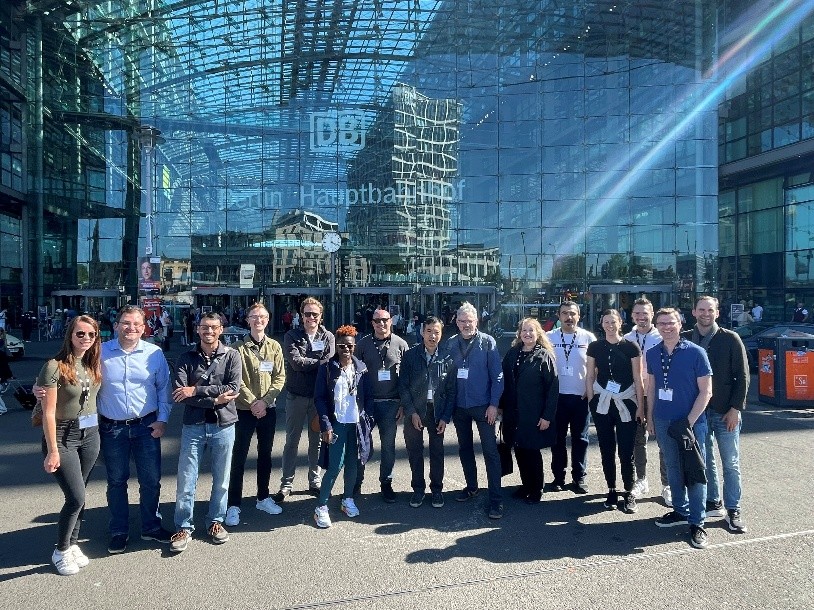
Guided Tour of Berlin Central Station
Key highlights from the event included:
Berlin Central Station: Berlin Hauptbahnhof is one of Europe’s largest and most architecturally significant rail hubs, where delegates began their program; with a footprint of 85,000 square meters (914,932 sq. ft.), the station serves as a major gateway for high-speed, regional, and S-Bahn connections, and participants gained insight into how its design, multimodal integration, and operational efficiency support millions of passengers each year.
Battery‑Operated Trains and Electrification in Germany: Delegates were introduced to Germany’s progress in electrification and the deployment of battery‑operated trains designed to replace diesel multiple units. These trains operate as standard electric vehicles on electrified lines and switch seamlessly to battery power in non‑electrified sections.
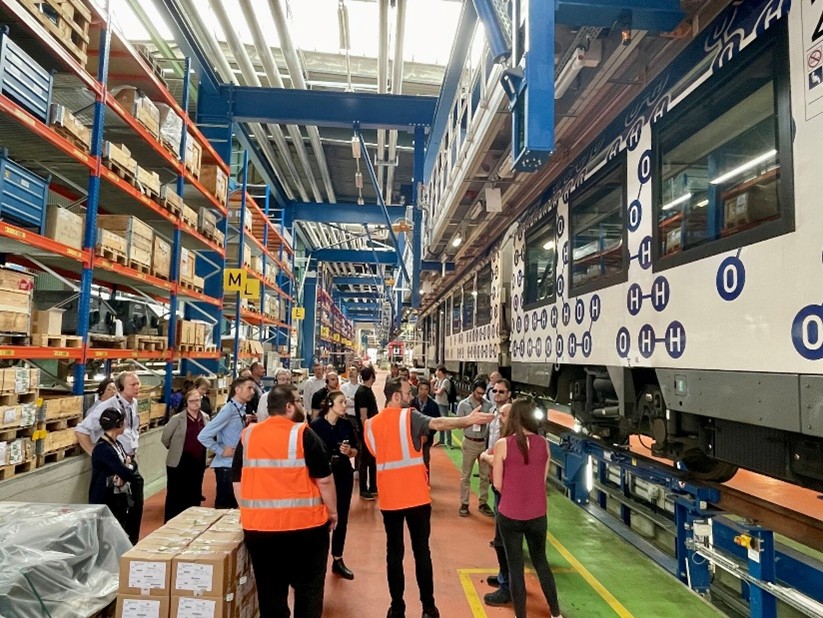
Guided Tour of the FLIRT Akku, Stadler’s first battery‑powered train
Ride on the Coradia iLint – Hydrogen‑Powered Passenger Train: Delegates experienced the world’s first commercial hydrogen fuel cell passenger train, the Alstom Coradia iLint, developed by Alstom. Emitting no CO₂ and producing only water as exhaust, the train represents a major step toward zero-emission regional rail transport. Already in regular passenger service in the Frankfurt region, the visit gave participants the chance to observe its performance and operational integration firsthand.
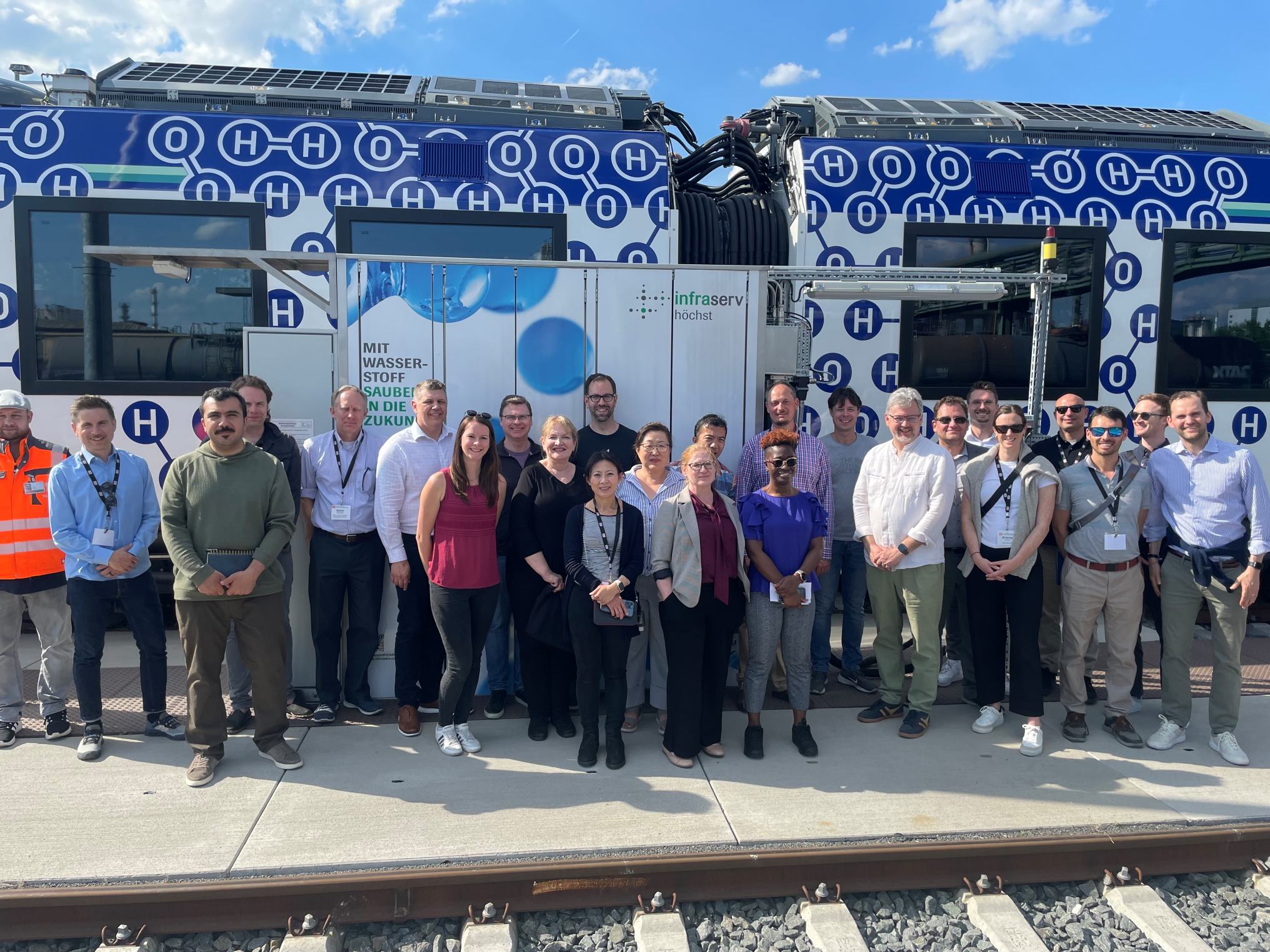
Guided Tour and test ride with the Coradia iLint – Hydrogen‑Powered Passenger Train
Climate‑Neutral InterCity Express Maintenance Depot: Delegates visited one of Europe’s most modern and environmentally advanced rail maintenance facilities, designed to operate entirely CO₂-neutral. The depot utilizes geothermal energy for heating and cooling throughout its workshops, warehouses, and administrative areas, setting a benchmark for sustainable infrastructure in rail operations.
Horrem Station – Europe’s First Climate‑Neutral Train Station: The program concluded with a visit to Bahnhof Horrem near Cologne. Equipped with a photovoltaic rooftop system, the station feeds solar energy into the public grid, while additional solar collectors support the building’s hot water supply—offering a practical example of sustainable station operations in action.
The “Exploring Germany’s Net Zero Emission Initiatives” delegation trip offered participants a comprehensive understanding of Germany’s decarbonization strategy and the technologies shaping the future of zero‑emission rail. DB E.C.O. North America thanks all attendees and Deutsche Bahn colleagues for their contributions, expertise, and commitment to fostering transatlantic collaboration.